

Parties
| All | Active | Inactive |
| ASC | DESC |
Independent
Other notable candidates to run as true, non-affiliated independents were John Anderson in 1980 and Ross Perot in 1992. Both made a notable impact on those elections, however, neither were able to win the presidency. |
||||||||||||
 Federalist Party
The only Federalist president to hold office was John Adams, who strengthened the US military and negotiated neutrality during the French Revolution. He dodged conflict in the Quasi War when he built up the US Navy to oppose French vessels that were threatening American coastlines. He also signed the Alien and Sedition Acts in 1798, which gave the president wide powers to control unrest caused by outspoken French revolutionaries in the US, but were heavily criticized for suppression of free speech. A rift between Adams and the "true" Federalist Alexander Hamilton revealed a disunity in the Federalist Party, and Adams lost a close election in 1800. After the Federalist loss to Thomas Jefferson in 1800, the party went into decline and disbanded in 1820. |
||||||||||||
 Democratic-Republican Party
The Andrew Jackson and Martin Van Buren version of the Democratic-Republicans would eventually merge into the Democratic Party, still asserting the same agrarian, working class, and decentralization values. A new type of Federalist emerged when John Quincy Adams was narrowly elected in 1824, espousing a national bank, protective tariffs, and federally funded infrastructure projects. This new brand of Democratic-Republican would eventually turn into the Whig Party. |
||||||||||||
 Democratic Party
In 1932 FDR launched the New Deal, which offered government relief programs and major public works projects, and established the Democrat platform into the next few decades. By the late 1960s the energy had faded with extreme internal opposition to the Vietnam War, and wasn't revived until the centrist Bill Clinton unified the party around economic expansion, crime prevention, and fiscal responsibility. The new variety of the Democratic Party is centered around healthcare for all, immigrant rights, and combatting corporate interests. |
||||||||||||
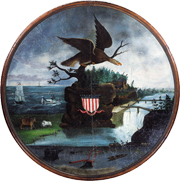 Whig Party
Although the Whigs never took a formal stand on slavery, many party members were abolitionists. The Kansas-Nebraska Act of 1854 changed everything for the Whigs, and party leaders were forced to take sides on slavery, which divided and dissolved the party. They went on to become the Republican Party, headed by Abraham Lincoln. |
||||||||||||
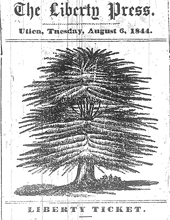 Liberty Party
The Liberty Party merged into the Free Soil Party in 1848, which strengthened the rising vocal support for the ban of slavery in the US. |
||||||||||||
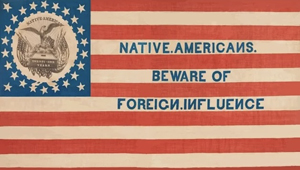 Know Nothing Party
The Know Nothings gained control of several congressional seats in the mid-1850s but only fielded one presidential candidate, Millard Fillmore in 1856 who won just one state, Maryland. They disbanded shortly thereafter when many members became outspoken advocates of slavery, which divided the party. |
||||||||||||
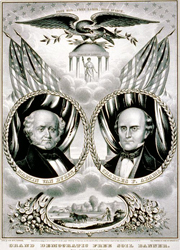 Free Soil Party
The party fielded a candidate for president in 1848, Martin Van Buren, who got 10% of the national vote, quite large for a third party. By 1854 the party had broken up, however, with party members merging with the Whigs into the Republican Party, as a means of gaining more influence. |
||||||||||||
 Republican Party
During reconstruction the Republican Party maintained its support for emancipation with the passage of laws such as the 13th, 14th, and 15th Amendments, guaranteeing former slaves the same social status as all Americans. The Reconstruction Act of 1867 enforced these new laws through military deployment in former slave states. By the 1900s the emphasis had shifted towards a more economic outlook, with party leaders favoring industrialization and big business as a way to improve overall prosperity. This free market approach to economics was combined with the Progressive policies of Teddy Roosevelt and William Taft, who were famously credited for busting up monopolies, passing consumer protection laws, and introducing the National Park system. By the 1920s the American Dream was born, with new technologies becoming affordable for many Americans. The party went into decline after the Great Depression, and after a brief interlude during the Eisenhower years, weren't able to forge a comeback until the "Morning in America" of Ronald Reagan, which touted a growing economy, low inflation, and a tough on Communism foreign policy. The Donald Trump era transformed the party into its newest iteration, emphasizing border security, job protection through tariffs, and law and order. Trump's outspoken portrayals of media moguls and bureaucrats as detached elitists also rang a note with working class Americans tired of feeling excluded. |
||||||||||||
 Prohibition Party
During the height of its popularity, the Prohibition Party was generally considered progressive on economic issues and conservative on social ones, however temperance was always the main selling point for the party. |
||||||||||||
 Greenback Party
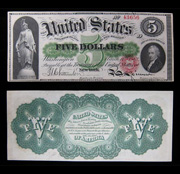
The party fielded a presidential candidate in 1876 and another in 1880, and boasted 14 members of Congress at one point. The greenback currency faded into obscurity because of its unstable nature, but the Greenback Party merged into the People's Party in 1889, and later the Progressives of the early 1900s. The main achievement of the Greenback Party was that it brought the Progressive agenda to light in an era when regulations on industrial workplaces became a necessity. |
||||||||||||
 People's Party
James B. Weaver was the party nominee in 1892 and won around 8% of the national vote and carried four states, Kansas, Colorado, Idaho, and Nevada. After the 1892 election, the party went into steep decline when the William Jennings Bryan and the Democrat Party began offering many of the same positions as the People's Party, and many members switched parties in search of more influence. Eugene Debs founded the Socialist Party in 1901, which further eroded support for the People's Party. |
||||||||||||
 Socialist Party of America
Eugene Debs, the party leader, ran for president five times from 1900 to 1920, and won about a million votes in both 1912 and 1920, good for around 5% of the national vote each time. Maybe more impressive were the legions of Socialist mayors and local councilmen elected across America, making the party one of the largest socialist organizations in the world during this era. The Red Scare of 1919 was a response to the rise of the Bolsheviks in Russia, post-war unrest and economic downturn in Europe, and an overall suspicion of left leaning policies. Many members of the Socialist Party switched to safer ground during this period, while other more radical factions joined the Communist Party USA. |
||||||||||||
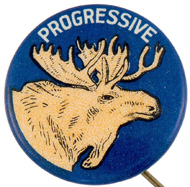 Progressive Party
Many voters connected with the Bull Moose message, and the party gained 27% of the vote in 1912, compared with Taft's 24%, and Wilson's 42%. Clearly the result was that Roosevelt's new party only ended up stealing votes from the Republican side, and gave the presidency to the Democrats. By 1916 Roosevelt admitted his error and endorsed the Republican Charles Evans Hughes for president, thus collapsing the Progressive Party after just one candidacy. |
||||||||||||
 Communist Party USA
However, after the war many Americans identified the Communist Party USA with Soviet Russia, and many Stalin-era atrocities were revealed which drew a negative light on the organization. US support for communism hit such a low point in 1947 that the Un-American Activity Committee started investigating CP USA members for espionage and other means of influence, and many top leaders were sent to jail. This was all unraveling during the height of the Cold War when Harry Truman was committed to fighting communists on a world wide scale. The blacklisting continued in 1954 during the McCarthy trials, when many members resigned from the party in fear of losing their place in society. CP USA is still active today, but doesn't have anything close to the support it had during the 1930s and early 1940s. The party no longer offers a candidate for president during elections, and has instead focused on activism on non-political levels. |
||||||||||||
 American Independent Party
Wallace got 13% of the national vote in 1968 and earned 46 electoral votes from five states. He decided to run for president as a Democrat in 1972, but his election bid was halted by an assassination attempt in May of that year. Wallace was hit by four bullets during a campaign speech in Maryland, and was paralyzed from the waist down. He withdrew his run for president because campaigning from a wheelchair was too difficult. John G. Schmitz ran as the AIP candidate that year and got around a million votes, but took no states. The party is still active today, and has declined over the years, with many members choosing to join the Constitution Party. |
||||||||||||
 Libertarian Party
Economically conservative but socially liberal, the Libertarians have found success at drawing support from many divergent interest groups. They have balloted a candidate in every presidential election since 1972, with strong outings in 1992, and again in 2016 when Gary Johnson took 4.5 million votes and 4% of the popular count. They boast around 700,000 members and are the third largest political party in America. |
||||||||||||
 Constitution Party
Just after its inception, the party was strong out of the gate for president, gaining 40,000 tallies in 1992 and 180,000 in 1996. The best count in their history was in 2016 when presidential contestant Darrell Castle took 180,000 votes, good for 0.2% of the total. Lately the numbers have not been the greatest, with only 40,000 votes in 2024. Nonetheless, the Constitution Party is the fifth largest political party in the US with around 150,000 registered members. |
||||||||||||
 Reform Party
Perot received just 8% of the vote in 1996, and totals have dwindled since then. The Reform Party today has about 3000 registered members, and some state level affiliates of the party have joined the Alliance Party. |
||||||||||||
 Green Party
The Green Party's biggest turnout for a presidential election was in 2000, gaining almost 4 million votes, and likely was responsible for George W Bush's victory that year. In 2016 the party also had a strong showing, with 1.5 million votes and 1% of the popular count. Totals have declined since then, but the Green Party is the fourth largest party in the US with around 250,000 registrants. |
||||||||||||
 Alliance Party
The Alliance Party got about 750,000 votes for president in 2024 in spite of the fact that their candidate, Robert Kennedy Jr, dropped out in August and endorsed Donald Trump. |