
Assassination
| All |

|

|
| All |

|

|
ASC
DESC
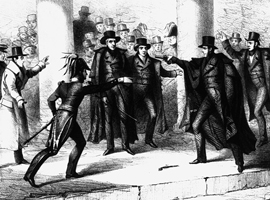
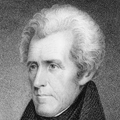
The first assassination attempt of a US president occurred in January of 1835, when Richard Lawrence, a housepainter from England, approached Andrew Jackson as he was returning to the White House after a funeral, and tried to shoot him. Both of Lawrence's pistols misfired, and Jackson immediately began beating the attacker with his cane, before he was sent to jail.
In the early 1830s, Andrew Jackson opposed the operation of the Second Bank of the United States on a national level, triggering a political struggle known as the "Bank War". Eventually Jackson's side won and the federal banking system was replaced by state banks. Richard Lawrence, mentally ill and delusional, thought that the US government owed him money for some reason, and that Andrew Jackson was preventing the money transfer by shutting down the national bank system. By killing Jackson, he would open the door for Martin Van Buren to become president, who would then repay him the money. On April 11th, Richard Lawrence was found not guilty by reason of insanity and sentenced to life in a mental institution. |
||||||||||||||||||||
|
|
||||||||||||||||||||
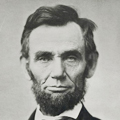
In mid-August of 1864, Abraham Lincoln was riding his horse in Washington DC at night, heading towards the Soldier's Home where he frequently spent the night in the summer months. A shot rang out, spooking Lincoln's horse, and it galloped forward suddenly, sweeping Lincoln's stovepipe hat off his head. When he arrived at the Soldier's Home front gate, he explained to the sentry why his hat was missing. The guard and a corporal on duty decided to retrieve the lost item, and returned to the cottage, revealing a bullet hole in the top of the hat's crown! Lincoln was surprised to find out that the shooter had almost killed him, but insisted that the men keep the story quiet to prevent him to appear vulnerable to future attempts.
After this occurrence, Lincoln was required to have a bodyguard at all times, and never ride his horse alone. Many theories speculate that the shooter was none other than John Wilkes Booth. |
||||||||||||||||||||
|
|
||||||||||||||||||||
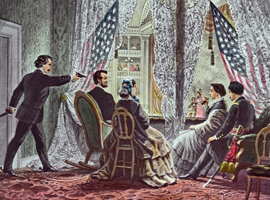
John Wilkes Booth, a well-known theater actor and Confederate sympathizer, was a previous participant in a kidnapping effort of Lincoln, aborted when the president changed his evening plans. After the failed attempt, Booth chose to assassinate Lincoln just five days after the surrender of General Lee to the Union Army.
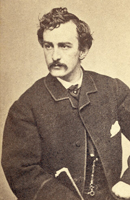 As an actor who had performed several times at Ford's Theater, Booth had access to the upper Presidential Box with fair certainty he would not be searched. After a few drinks at a nearby tavern, he entered the theater in the middle of the play, gained admittance to the upper floor, and walked into Lincoln's room. He chose the precise moment of a punchline that always drew a loud response to shoot Lincoln in the back of the head. From there Booth stabbed a theater guest and jumped from the balcony, several feet down to the stage. It's unclear what he stated as he ran across the stage, but many said he shouted "Freedom", and others thought he said "The South shall be free!", and still others recall him shouting "I have done it!".
 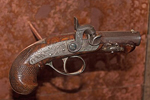 The assailant then stabbed the orchestra leader and ran outside through a side door, chased by several theater attendees. Booth was barely able to mount his horse and make his getaway, with others chasing. A manhunt involving thousands of US troops ensued, and it ended 12 days later at Garrett's Farm near Fredricksburg, VA, where agents flushed Booth out by setting fire to the farm before shooting him dead. The assailant then stabbed the orchestra leader and ran outside through a side door, chased by several theater attendees. Booth was barely able to mount his horse and make his getaway, with others chasing. A manhunt involving thousands of US troops ensued, and it ended 12 days later at Garrett's Farm near Fredricksburg, VA, where agents flushed Booth out by setting fire to the farm before shooting him dead.
Abraham Lincoln went into a coma after the incident and died the next morning of the gunshot wound, and Vice President Andrew Johnson was declared 17th president of the United States. The funeral procession was held a few days later, drawing hundreds of thousands of visitors to Washington DC to pay their respects. Millions more people lined the streets to watch his casket pass by on the way to his home in Springfield, Illinois. |
||||||||||||||||||||
|
|
||||||||||||||||||||
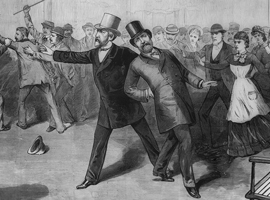
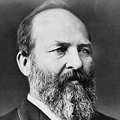
In 1880 Charles Guiteau worked for the Garfield campaign, and wrote and distributed a speech that supported Garfield for president. After the election, Guiteau felt that his work deserved more recognition, and demanded on several occasions that the new president offer him a cabinet position, specifically Ambassador to France. When Garfield refused the suggestion, the delusional and dejected Guiteau chose to assassinate the president.
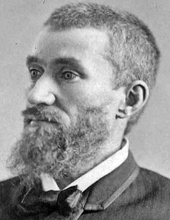 The aspiring assassin spent an entire month following Garfield around Washington, tracking his moves and noticing any vulnerabilities in his routines. On July 2, 1881, Guiteau took a cab to the Baltimore and Potomac Railroad Station where Garfield was scheduled to leave on summer vacation. During the late 1800s, US presidents usually had no bodyguard and no security detail, since private entourage and personal friends were considered adequate protection. Guiteau was able to approach the president in the station waiting room and shoot him from behind, once in the shoulder, and once in the back.
 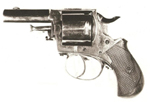 A lynch mob quickly formed and surrounded Guiteau, demanding he be hung on the spot. Instead, a group of local police officers arrested him and held him until his trial one month later. His lawyers pled for insanity defense and medical malpractice defense, but Charles Guiteau was found guilty and executed by hanging on June 30th, 1882, about one year after the assassination. A lynch mob quickly formed and surrounded Guiteau, demanding he be hung on the spot. Instead, a group of local police officers arrested him and held him until his trial one month later. His lawyers pled for insanity defense and medical malpractice defense, but Charles Guiteau was found guilty and executed by hanging on June 30th, 1882, about one year after the assassination.
James Garfield spent the next 2 1/2 months in extreme pain, sometimes alert but other times incoherent. Doctors probed his body in an effort to find the lodged bullet, but to no avail. They even offered the services of Alexander Graham Bell to use a recently invented metal detector to find the bullet, but the patient's metal bedframe interfered with the device, and doctors insisted Garfield's body not be moved too much. His condition declined, and infection soon set in. He ran a constant fever, and was unable to hold down solid foods. James Garfield died on September 19, 1881, of infections due to the bullet wound and unsanitary practices of his doctors. Chester Arthur was declared the 21st president of the United States later that same day. |
||||||||||||||||||||
|
|
||||||||||||||||||||
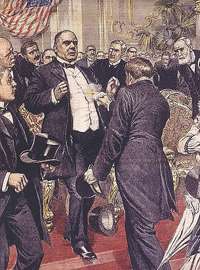
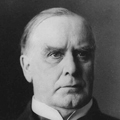
Anarchism took it's toll in the 1890s, with at least four European heads of state falling to anarchist assassinations. Disgruntled socialist and anarchist Leon Czolgosz vowed to continue the trend in the US because he considered president McKinley a symbol of oppression, "the enemy of good working people".
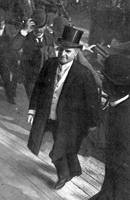 McKinley, a firm believer in direct interaction with the public, did not surround himself with security guards during many appearances. This lapse in judgement provided Czolgosz with the opportunity to kill the president that he was looking for. The assailant spent the day before the attack following McKinley around the World's Fair Exposition, listening to his speeches and trying to get close enough to take action. He concluded that the best chance would be the following day at a public reception. The next morning Czolgosz approached the president to shake his hand during the public greeting period, and shot him twice in the abdomen.
 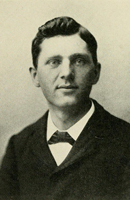 The attacker was severely beaten by public attendees and police, at which point McKinley demanded that the crowd stop the beating. The president was rushed to the hospital and his diagnosis remained optimistic until 12 days later, when he died from gangrene complications surrounding his injuries. Teddy Roosevelt was declared president of the United States later that day. The attacker was severely beaten by public attendees and police, at which point McKinley demanded that the crowd stop the beating. The president was rushed to the hospital and his diagnosis remained optimistic until 12 days later, when he died from gangrene complications surrounding his injuries. Teddy Roosevelt was declared president of the United States later that day.
After a two-day trial, Leon Czolgosz was convicted of first degree murder and sentenced to death. He was executed a month later. After the assassination, US Congress required the Secret Service to protect the president at all public occasions. |
||||||||||||||||||||
|
|
||||||||||||||||||||
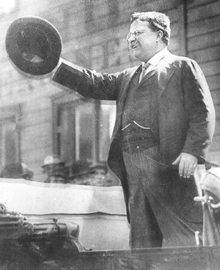
Former president Theodore Roosevelt ran for a third term in 1912, as a member of the Bull Moose Party. Many Americans were upset over the effort to supersede George Washington's tradition of limiting presidents to two terms. One particular person, a saloon keeper from New York named John Schrank, was so incensed that he vowed to kill Roosevelt, to prevent what he thought was a power grab.
 After stalking Roosevelt for weeks, Schrank shot him in the chest as the candidate stood up in a car outside his hotel in Milwaukee. The bullet passed through Roosevelt's steel eyeglass case and a 50-page copy of the speech he was about to give, before lodging in his chest. Roosevelt, a hunter, correctly determined that he was not gravely ill because he was not coughing up blood, indicating that the bullet had not penetrated his lungs. Schrank was quickly mobbed by the crowd which shouted "Hang him!", and "Kill him!", but relief set in when Roosevelt assured everyone he was OK and instructed the audience not to harm the perpetrator. Teddy Roosevelt would go on to deliver his scheduled speech by opening up with "Ladies and gentlemen, I don't know whether you fully understand that I have just been shot, but it takes more than that to kill a bull moose."
John Schrank was arrested and stood trial. He initially pled guilty but was declared legally insane on November 25th, and committed to a hospital for the criminally insane where he remained for the rest of his life. Woodrow Wilson went on to win the election over both Roosevelt and Taft in a landslide. The bullet remained lodged in Roosevelt's chest for the rest of his life, doctors fearing the removal might cause harm similar to that of James Garfield in 1881. |
||||||||||||||||||||
|
|
||||||||||||||||||||
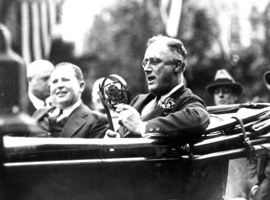
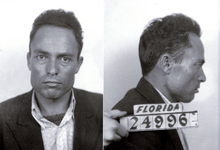 On February 15th, 1933, a mentally ill bricklayer from New Jersey took several shots at Franklin Roosevelt's motorcade as the president-elect was giving a speech. Roosevelt was not hit, but four bullets injured some bystanders, and one bullet hit and killed Chicago mayor Anton Cermak. The damage probably would have been worse but an audience member grabbed Zangara's arm after the first shot, and forced it upwards, impeding the attack.
While in jail Zangara claimed "I kill kings and presidents first and next all capitalists". He was tried and convicted of murder, and executed by electric chair a month later. |
||||||||||||||||||||
|
|
||||||||||||||||||||
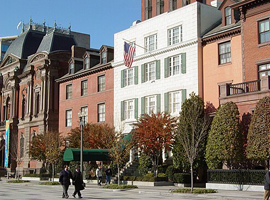
On November 1st, 1950, Oscar Collazo and Griselio Torresola, two Puerto Rican nationalists, raided the Blair House in Washington DC in an effort to assassinate Harry Truman, who was staying at the house while the White House underwent renovations. They opened fire on White House guards who returned volleys. Collazo shot an officer in the knee, but immediately was hit in the chest by one guard, and again by two other officers, effectively wounding him and preventing any further shots. Torresola shot officer Leslie Coffelt four times at point blank range, and shot another who was able to shut the door to the Blair House, thus blocking entry. Coffelt, severely injured, was able to exit the guard booth prop himself up, and shoot Torresola in the head from 30 feet away, killing him instantly. Coffelt was taken to the hospital and died four hours later. The shootout is known as the biggest gunfight in Secret Service history.
Oscar Collazo was sent to jail and sentenced to death, but his sentence was commuted to life in jail by Truman, and later time served by Jimmy Carter. |
||||||||||||||||||||
|
|
||||||||||||||||||||
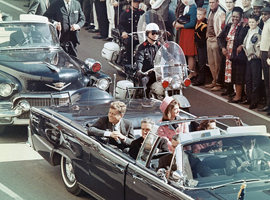
John F. Kennedy was riding in his presidential motorcade through Dallas, TX on November 22nd, 1963, when he was shot in the head and back, killing him instantly. Texas Governor John Connally was seriously injured in the attack but recovered soon thereafter. Kennedy was later pronounced dead and Lyndon Johnson was declared president.
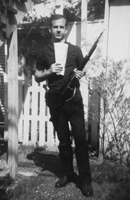 Lee Harvey Oswald dropped his rifle after he took the shots, and fled the book depository building to his home in a nearby neighborhood, where he retrieved some clothes and a handgun. After ä patrol car pulled him over for questioning because he appeared suspicious, Oswald shot the officer dead. He was discovered a few minutes later and arrested. Two days later he was murdered while being transferred to a different jail by nightclub owner Jack Ruby, who claimed he was distraught over Kennedy's death.
The Warren Commission was created a week later, with instructions from Lyndon Johnson to uncover the motive behind the shooting. A year later the commission concluded that Oswald had acted alone when killing Kennedy, and Ruby also acted alone when killing Oswald. However, many questions still remain. Oswald was a known Communist sympathizer, and spent two years living in the Soviet Union. He also may have had ties to Cuba because he visited the Cuban and Soviet embassies just two months before the assassination. However, he could have acted alone because he was an ex-Marine, very familiar with weapons, and was deemed "a disturbed youth" by a psychiatrist. He was also a strong opponent of Kennedy's anti-Communist policies. Many theories have arisen about whether Oswald had an accomplice, citing the impossibility of the "single bullet theory", which claims that both Kennedy and Connelly were injured by the first bullet. The "grassy knoll theory" suggests that there was a second shooter who could account for the rapid second shot that killed Kennedy. Cycling the bolt of a Carcano Model 38 rifle can be done quickly since it has a light trigger pull and soft recoil, but still requires skill, practice, and precision. The motive for the attack remains unclear, but US public opinion polls have indicated that the majority of Americans believe there was some type of wider conspiracy surrounding the Kennedy assassination. |
||||||||||||||||||||
|
|
||||||||||||||||||||
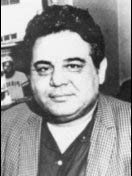 On February 22nd, 1974, Samuel Byck, disgruntled because the Small Business Administration rejected his loan application, decided to assassinate president Nixon by crashing a DC-9 commercial jet into the White House. He bull rushed the security gate, shooting and killing an airport security guard before brandishing his pistol and a homemade bomb at the boarding gate, and demanded to board the plane. Byck proceeded to shoot and kill one pilot, and shoot and injure another when one pilot claimed the plane couldn't take off immediately since the wheel blocks were still in place. A flight attendant was forced to close the aircraft door after Byck threatened to blow up the plane. As the hijacker argued with the flight crew over the removal of the wheel blocks, a police officer fired at Byck through the aircraft door window using the revolver he removed from the dead security guard. The injured Byck then fell on top of his homemade explosive device and shot himself, dying shortly thereafter.
After this attack, several improved security measures were implemented across all US airports, dramatically reducing the number of hijacking occurrances. |
||||||||||||||||||||
|
|
||||||||||||||||||||
In 1973 and 1974, Los Angeles, CA was hit with a string of bombings and arson incidents that killed three people and injured many others. The terrorist sent cassette tapes to news outlets and claimed responsibility for the attacks, and threatened several others.
The assailant was Muharem Kurbegovic, who launched his terror spree in 1973 by starting fires at the homes of local Los Angeles judges and police commissioners. The fires were extinguished quickly, but the attacks continued six months later when the Police Commissioner's car was ignited by an incendiary device planted in the gas tank, and three apartment buildings were set on fire. Kurbegovic then dropped off cassette tapes to news outlets asserting responsibility under the name of "Aliens of America". On August 6th, 1974, the Alphabet Bomber struck again, this time by planting a bomb in a storage locker room in the Los Angeles airport, killing 3 people and injuring 36 others. Ten days later a bomb was discovered in a Greyhound Bus station in downtown Los Angeles with a capacity to kill several more people. The Alphabet Bomber admitted responsibility and issued more threats, and then decided to go nationwide, issuing a threat to kill president Ford and ex-president Nixon with a bomb carrying a nerve agent. By this time the Feds were involved, and coordinated with LAPD to assemble evidence. They established a criminal profile based on the statements made on the cassette tapes and complaints from Kurbegovic's co-workers where he expressed interest in the bombings, and likely was responsible for stealing explosive chemicals. When they searched his home they found pipe bombs and 25 pounds of potassium cyanide and nitric acid, which he planned to use to create cyanide gas. Kurbegovic was convicted in 1980 of murder, arson, attempted murder, possession of explosives, and exploding a bomb. He was sentenced to life in prison. |
||||||||||||||||||||
|
|
||||||||||||||||||||
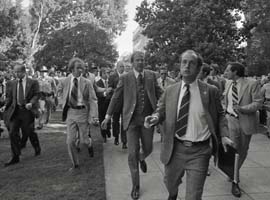
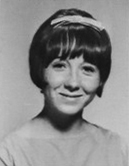 Lynette "Squeaky" Fromme was an active member of the Charles Manson Family, a criminal cult responsible for the murders of at least nine people in the late 1960s and early 1970s. Fromme was not involved in the Tate-LaBianca murders, but she spent time behind bars for obstruction and contempt of court during the trial of those crimes. She was implicated, but not charged, in another Manson Family murder in 1972.
By 1975 Fromme was living in Sacramento, and a news bulletin mentioned that president Ford would be speaking at the Sacramento Convention Center and staying at the Senator Hotel, just blocks from her apartment. Fromme at this point in her life was a radical environmental activist who believed that the Ford Administration's loose enforcement of environmental laws was killing trees and wildlife. To take vengeance on these political positions, Fromme chose to assassinate the president. Dressed all in red to protest the environmental laws, Lynette Fromme took a Colt M1911 pistol given to her by a friend, stashed it under her dress, and walked down to the Capitol Building where a crowd had assembled, waiting for Ford to greet them after his speech. The assailant waited for Ford to approach, then drew the weapon at point blank range, and pulled the trigger. Fromme, however, was not a skilled shooter and had failed to pull back the gun's slide, which loads the chamber from the detachable magazine in the handle. A Secret Service agent grabbed the gun, forced it away from the perpetrator, and dragged her to the ground. President Ford was not injured in the failed effort, and went on to his meeting without schedule changes. Lynette Fromme received a life sentence for attempted murder in November of that same year, but was released on parole in 2009. |
||||||||||||||||||||
|
|
||||||||||||||||||||
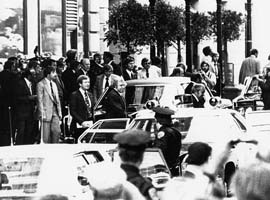
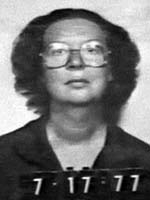 Patty Hearst, granddaughter of William Randolph Hearst, was kidnapped from her UC Berkeley off-campus apartment in early 1974. The Symbionese Liberation Army would later take credit for the abduction, and began brainwashing the hostage and coercing her to join their group. Hearst spent much of 1974 and 1975 partaking in bombings and robberies throughout California, until her arrest in September of 1975.
Many Americans felt sympathy for Hearst because they were convinced she had been forced to comply with the SLA demands to participate in the crimes. Others were impressed by the gangster lifestyle and political causes she espoused. One such admirer was Sara Jane Moore, a self-described revolutionary who had taken work at PIN, the People In Need organization, created by Randolph Hearst at the demand of the SLA, in hopes to get his daughter released. On September 25th, just three weeks after the failed assassination attempt by Lynette Fromme on president Ford, Moore decided to take her radical views to the next level, and kill the president. She hastily bought a handgun and waited in an assembled crowd waiting to watch Ford exit his hotel after giving a speech. Moore's first shot missed the target by a few inches, since she was unfamiliar with the weapon. She lined up for another shot but a bystander grabbed her arm and the discharged bullet went wide. She was subsequently mobbed by police officers and thrown in jail. In very similar fashion to the earlier assassination attempt, president Ford was rushed from the scene and continued his day without disruption. Sara Jane Moore was sentenced to life in prison and released in 2007. Patty Hearst was sentenced to 35 years in jail for her role in several robberies, but the sentence was commuted by Jimmy Carter just two years later. |
||||||||||||||||||||
|
|
||||||||||||||||||||
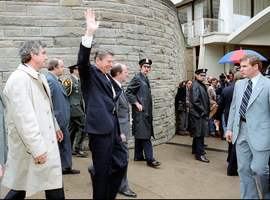
In early 1981, a delusional and psychotic John Hinckley Jr repeatedly watched the movie Taxi Driver before developing a fixation for the lead character who tries to assassinate a US Senator. His derangement went a step further when he planned to assassinate president Ronald Reagan as a way to fulfill his obsession.
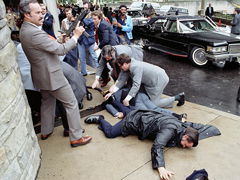 On March 30th, he was able to sneak a Rohm RG-14 handgun past two levels of security outside the Washington Hilton hotel, and wait just inside the security rope. The president exited the hotel, waved to the crowd, and passed right in front of Hinckley, who opened fire indiscriminately, initially striking a secret service agent and a police officer with the first two shots. With those two targets down, Hinckley now had a clear shot at Reagan, but a crowd member hit him in the head and his third shot overshot the president and struck a building across the street. The fourth bullet hit a secret service agent who by now was shielding the president as he was being shoved into his limousine. The fifth round fell to the ground after hitting the bullet resistant window of the rear door that Reagan was trying to enter. The last bullet ricocheted off armored side of the limousine, then struck the president in the forearm and then his ribcage, before lodging in his lung.
Hinckley, out of ammo, was pushed to the ground and punched, then arrested. Reagan was rushed to the hospital and onto the operating table within minutes. He had trouble breathing, low blood pressure, and went into shock. He slowly recovered, however, partly due to the quick action of doctors, who treated him with intravenous fluids, oxygen, tetanus toxoid and chest tubes. They discovered and removed the bullet. When Nancy Reagan arrived at the ER, the president declared, "Honey, I forgot to duck". The general public was amazed at his such a speedy recovery for a 70-year-old, and he was back in the Oval Office three weeks later. John Hinckley was committed to a mental institution and released in 2016. |
||||||||||||||||||||
|
|
||||||||||||||||||||
In October of 1994, a man with a semi-automatic rifle fired several shots at the White House from the gate overlooking the North Lawn. The objective was to kill president Clinton who was in the White House at the time, but he was uninjured.
A group of tourists was able to wrestle the attacker to the ground, and he was arrested, convicted of attempted murder of the president, assault, and illegal possession of a firearm, and sentenced to 40 years in jail. |
||||||||||||||||||||
|
|
||||||||||||||||||||
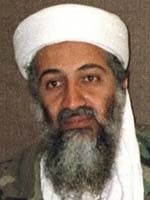 Air Force One was about to land in Manila, Philippines with Bill and Hillary Clinton onboard, headed for the Asia-Pacific Economic Cooperation summit, when they were suddenly alerted of a terrorist plot to kill them. A bomb was reportedly placed under a bridge along their motorcade route, forcing the security team to find an alternate way to the meeting.
Shortly thereafter, Filipino security officers dismantled the bomb, and discovered a nearby SUV loaded with rifles and ammunition. Both Clintons were not harmed in incident, which was one of the earliest known al Qaeda terrorist attempts on the US, likely organized by Osama bin Laden. |
||||||||||||||||||||
|
|
||||||||||||||||||||
In 2003, many Georgians were angry with the resignation of President Eduard Shevardnadze because it marked the beginning of a Western style government and the end of Russian control of Georgia. In 2005, president George Bush visited the country to give a speech in Freedom Square when he was attacked by an opponent to US involvement. The assailant threw a hand grenade at the podium when Bush was speaking but it failed to detonate because part of the handkerchief he used to conceal the weapon got stuck in the safety lever.
Vladimir Arutyunian also killed an Interior Ministry agent later that day and was sentenced to life in prison. |
||||||||||||||||||||
|
|
||||||||||||||||||||
On November 11, 2011, Oscar Ramiro Ortega-Hernandez used a semi-automatic weapon to fire several shots at the White House from beyond the gate. Damage was inflicted on a the roof and window frames, but none of the bullets was able to penetrate the White House exterior. The gunman crashed his car moments later, but abandoned the vehicle with his weapon still inside, and fled to Pennsylvania. Five days later, he was identified as the car owner and arrested.
In September of 2013, a judge allowed Ortega-Hernandez to plead guilty to property destruction and discharging a firearm, thereby avoiding an assassination charge. He was sentenced to 25 years in jail. |
||||||||||||||||||||
|
|
||||||||||||||||||||
On April 17th, 2013 a letter that tested positive for the dangerous chemical ricin was addressed and mailed to president Barack Obama. The letters contained certain key words that implicated a Memphis, TN man in the attacks, who then realized he was being framed, and suggested one of his rivals, James Everett Dutschke, could be responsible. Dutschke was arrested a few days later and eventually received a 25-year sentence.
About a month later, similar letters were sent to Barack Obama, and TV actress Shannon Richardson was suspected when she called authorities and blamed her estranged husband, who then was able to prove she was trying to frame him. She pled guilty to the manufacture and possession of a biological weapon and was sentenced to 18 years in prison. |
||||||||||||||||||||
|
|
||||||||||||||||||||
A North Dakota man tried to assassinate Donald Trump when the president was visiting the Bismarck, ND area to give a speech in an oil refinery in September of 2017. He stole a forklift from a warehouse and was driving towards the presidential motorcade when the forklift broke down. Local law enforcement arrested him for the crime of stealing a forklift, and at that point he announced his true intention. He was actually on his way to the motorcade where he planned to lift the limousine and flip it over, hoping to kill the president.
He was sentenced to 20 years in prison. |
||||||||||||||||||||
|
|
||||||||||||||||||||
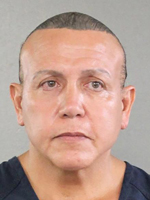 From October 22nd to November 1st, 2018, several pipe bombs were mailed through the US Postal Service to media members and prominent politicians, including Bill Clinton. Forensic evidence and DNA led investigators to a Florida man living in his van named Cesar Sayoc. Bomb making materials were found in his van and he was arrested.
He was sentenced to 20 years in jail. The judge spared him some time when bomb experts agreed that none of the bombs was capable of exploding since the detonators were not designed accurately. |
||||||||||||||||||||
|
|
||||||||||||||||||||
In September of 2020, Canadian woman Pascale Ferrier was arrested in Buffalo, NY trying to enter the US with a firearm and a knife. Authorities found violent Twitter posts that advocated the assassination of Donald Trump, and eventually connected her to earlier letters laced with ricin that had been mailed to the president.
She pled guilty and received 22 years in jail. |
||||||||||||||||||||
|
|
||||||||||||||||||||
On August 9th, 2023, the FBI raided the Provo, UT home of Craig DeLeeuw Robertson for posting violent threats on social media against Joe Biden and numerous other government officials. Agents then used a battering ram and breaching vehicle to try to destroy the home before shooting the suspect dead when he failed to lower his firearm.
|
||||||||||||||||||||
|
|
||||||||||||||||||||
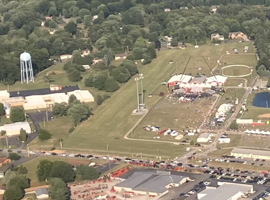
On July 13th, 2024, presidential candidate Donald Trump was shot in the ear during a campaign speech, and one audience member was died, and two others were wounded. Thomas Crooks fired eight shots into the rally from a rooftop, and was killed moments later by a secret service sniper. Trump was smothered by security agents, but then he was lifted up after the threat was eliminated, and thrust his fist into the air and shouted, "Fight, fight, fight!". He was then escorted to the hospital to treat his ear wound.
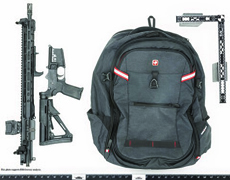 After the incident, criticisms were aimed at security detail covering the rally. It was revealed that the lapse in adequate protection was due to a series of security and communications failures, including a shortage of personnel and chain of command issues between local law enforcement and secret service agents. Somehow the warehouse where Crooks was perched was located outside the security perimeter, but it was only around 400 feet from the rally, within range of the shooter's AR-15. Crooks was able to walk freely up to the warehouse, and gain access to the roof via an air conditioning unit. He was in fact noticed by security agents who alerted superiors of the suspicious person, but text messages were not specific about how to proceed. A local agent was eventually able to reach the roof but failed to climb up because the assailant aimed his rifle at the officer, and 30 seconds later, shots rang out. An investigation ensued, resulting in the resignation or suspension of several security administrators and agents.
A motive remains unknown, but several theories revolve within the media, including political motivation, a mass shooting attempt, a hired assassin by foreign influences, and mental instability, among others. |
||||||||||||||||||||
|
|
||||||||||||||||||||
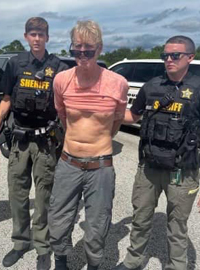
Ryan Wesley Routh was arrested for attempting to assassinate the president in West Palm Beach, FL in September of 2024. He was pointing a rifle at agents who were securing a golf course where president Trump was in the process of playing golf. Routh tried to escape after a taking fire from security, but later surrendered.
Ryan Routh was found guilty of attempted assassination, assaulting a federal officer, and other firearm charges. He later stated that "the end of Democracy and the beginning of a Civil War" was near if Donald Trump were elected. |
||||||||||||||||||||
|
|
||||||||||||||||||||